

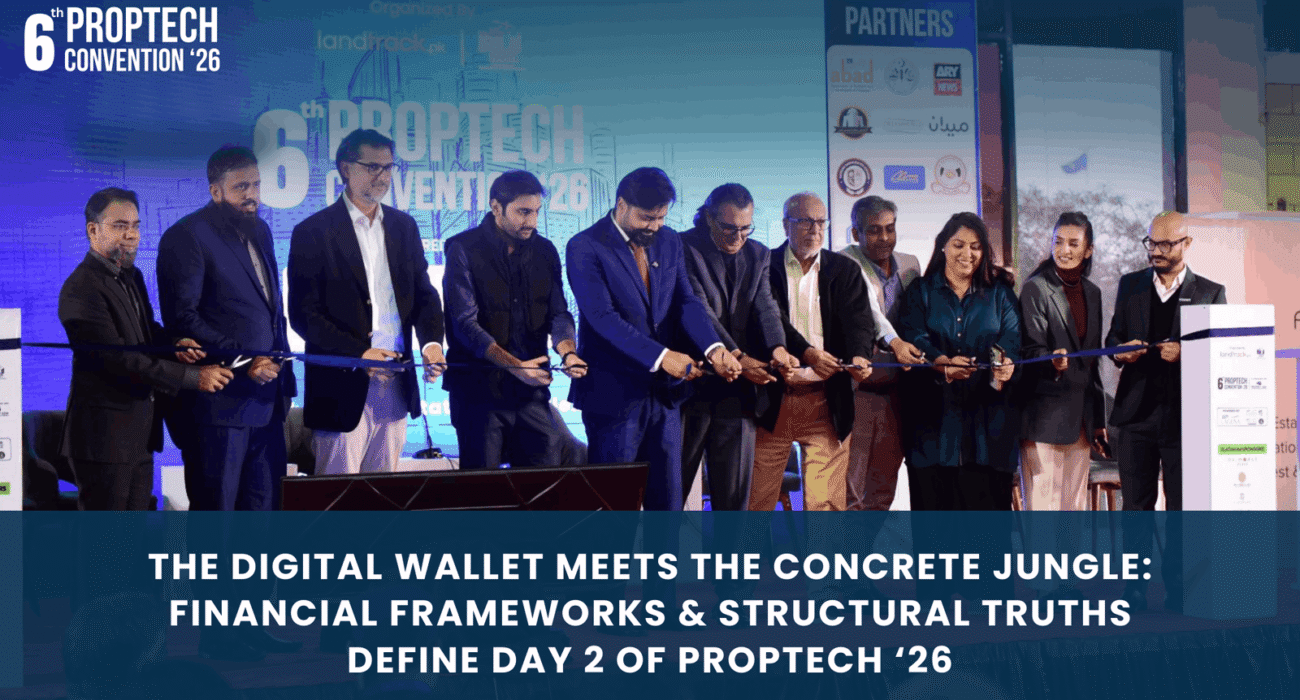
Day 1 of the PropTech Convention ’26 was about the “Dream” of a tech-enabled future, Day 2 was firmly about the “Machinery” required to build it.
Walking into the Expo Center this morning, the conversation had shifted from yesterday’s broad strokes of sustainability to the hard realities of doing business: How do we pay for it? And how do we build it so it lasts?
From the State Bank of Pakistan (SBP) dissecting the digital payment ecosystem to architects giving us a brutal reality check on building standards, January 23rd was a day of critical infrastructure—both financial and physical.
Here is my analysis of the pivotal moments from Day 2.
The SBP & The Digital Trust Layer
The morning session was dominated by one of the most significant panels I have attended in recent years: “Integrating Digital Payments with PropTech Platforms.”
Real estate in Pakistan has historically been a cash-heavy, documented-light industry. That is changing, and the regulators are leading the charge. The panel featured heavyweights like Ahmed Sumair (Joint Director, Payment Systems Policy & Oversight, SBP) and Sara Sajjad (Deputy Chief Manager, SBP BSC Karachi).
What stood out was the SBP’s clear stance: Financial Literacy is the new barrier to entry. The discussion wasn’t just about moving money; it was about the compliance and trust that comes with digital trails.
Muhammad Fahad Khan from Meezan Bank and Faisal Rauf from Bank Alfalah brought the banking perspective, arguing that until we integrate seamless digital gateways directly into PropTech platforms (like Landtrack.pk), the sector will remain fragmented.
Key Takeaway: The “black money” era of real estate is being squeezed out by digital payment integrations. For investors, this means the future belongs to platforms that offer SBP-compliant, transparent transaction methods. If your real estate developer isn’t talking about digital integration, they are already behind the curve.
The Reality Check: Why Are Our Buildings Falling Behind?
Post-lunch, the tone shifted from finance to physics. The opening talk by Monis Dara (Director, Bricle Constructions) titled “Why Are Our Buildings Falling Behind?” was a sobering opener for the afternoon.
This wasn’t a sales pitch; it was an industry intervention.
The subsequent panel, “Design & Structure Reality Check,” brought together the people who actually design our skyline—architects like Arch. Mohsin Ejaz and Arch. Abbas Safri, alongside engineers like Engr. Sohail Aziz.
The honesty in the room was refreshing. The panelists admitted that “cutting corners” in the design phase is leading to a crisis of confidence in Pakistani construction. The consensus? Technology (PropTech) is useless if the underlying structure is flawed. We need to use tech not just to sell houses, but to verify structural integrity before a single brick is laid.
Materials as the Catalyst for Modernization
You can’t build a smart city with dumb materials.
Late in the afternoon, we saw a fascinating pivot to “Materials as the Catalyst for Modernization.” This session featured major players like DG Cement, Jotun Paints, and Ghani Glass.
The highlight here was the MoU Signing between Landtrack.pk and Voltaic Power. This is a prime example of the cross-industry collaboration we need—integrating renewable energy solutions directly into the property buying lifecycle.
We also saw a technical presentation on Halogen Free Flame Retardants. It sounds technical, but after recent fire incidents in urban centers, fire safety materials are becoming a top priority for high-rise developers.
Karachi’s Industrial Engine Roars
The day concluded with a forward-looking panel on the “New Era of Industrial Growth in Karachi”.
While residential real estate often gets the glamour, industrial real estate is where the economic backbone lies. The panel included Col. Atif Gulzar (Chief Engineer) and Col. Agha Ummad Ali Khan from PEZDMC (Pakistan Export Zone Development & Management Company), alongside Sajid Abbasi (CEO, Times Group).
They laid out a roadmap for how industrial zones in Karachi are being modernized. For investors looking beyond apartments, industrial warehousing and logistics parks are emerging as the next high-yield asset class, driven by Karachi’s expanding port capabilities and infrastructure readiness.
Looking Ahead: The Final Day
Day 2 was the backbone—Finance and Structure. Tomorrow, Day 3 (January 24th), promises to be the “Brain” of the operation.
We are looking at:
Founder Hot Seats: Real pitches, real critiques.
Web3 & Blockchain: The “New Era of Ownership.”
Pakistan’s First Land Bylaws AI Agent: A potential game-changer for legal clarity.
If Day 1 was the vision, and Day 2 was the foundation, Day 3 is where we see the disruptors who will inherit this industry.
See you at the “Founder Hot Seat” tomorrow morning!
Q1: Why was the State Bank of Pakistan (SBP) present at a Real Estate Convention?
A: The SBP’s presence highlights the critical need for financial transparency in real estate. Their panel focused on integrating digital payments into PropTech platforms to ensure compliance, reduce fraud, and increase investor trust through documented financial trails.
Q2: What was the main takeaway regarding construction quality on Day 2?
A: The “Design & Structure Reality Check” panel concluded that the industry is “falling behind” due to compromises in the design and material selection phases. Experts emphasized that long-term property value relies heavily on structural integrity and adherence to modern safety standards, not just cosmetic appeal.
Q3: Were there any new partnerships announced on Day 2?
A: Yes, a significant MoU was signed between Landtrack.pk and Voltaic Power. This partnership signals a move toward integrating sustainable energy solutions (like solar power) directly into the PropTech ecosystem.
Q4: Is industrial real estate a good investment in Karachi?
A: According to the “New Era of Industrial Growth” panel featuring PEZDMC officials, Karachi is seeing a surge in industrial development. With improved infrastructure and organized industrial zones, this sector offers strong potential for investors looking for alternatives to residential property.
Q5: Who were the key banking partners involved in the digital payments discussion?
A: Key banking leaders included Muhammad Fahad Khan from Meezan Bank and Faisal Rauf from Bank Alfalah. They discussed the technical and operational challenges of bringing seamless digital payment gateways to the real estate market.
2 Comments