

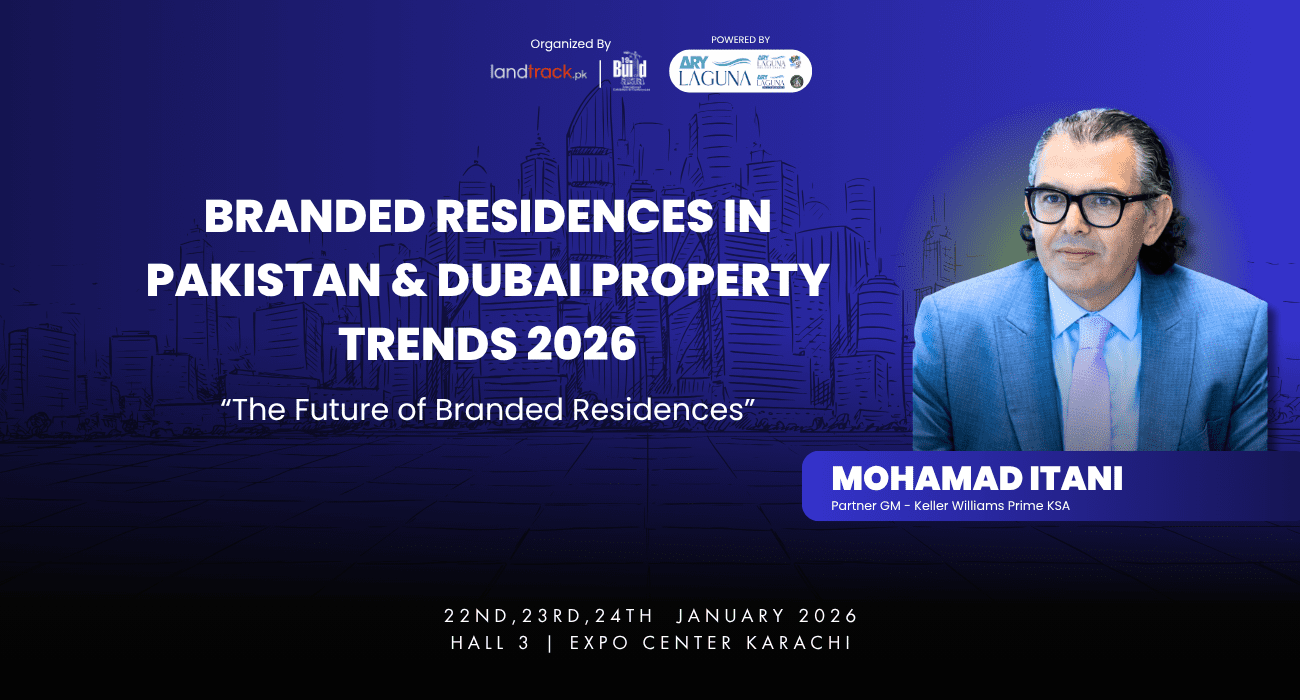
The global luxury real estate landscape is undergoing a paradigm shift, driven by the evolving demands of High-Net-Worth Individuals (HNWIs) and Ultra-High-Net-Worth Individuals (UHNWIs). As global wealth continues to expand and migrate, elite investors are seeking assets that offer more than just capital appreciation; they demand security, world-class amenities, and turnkey lifestyle solutions. Consequently, the branded residence sector has transitioned from a niche luxury offering into a foundational pillar of institutional and private wealth portfolios.
As we project into the next market cycle, a multi-layered narrative is commanding the attention of visionary developers and affluent buyers alike. This includes the sustained, record-breaking trajectory of Dubai Property Trends 2026, the explosive giga-projects of Saudi Arabia, and the glaring, untapped multi-billion-dollar potential for Branded Residences in Pakistan. By analyzing current market data, demographic capital flights, and global pipelines, developers and investors can position themselves at the forefront of this lucrative sector.
The Dawn of a New Luxury Era: What are Branded Residences?
To understand the trajectory of branded residences, one must look to the leading voices shaping the market. Speaking at the recent PropTech Convention, Mohamad Rabih Itani, Partner & GM at Keller Williams Prime KSA, delivered a masterclass on the sector’s explosive growth and fundamental value proposition.
Itani emphasized that a branded residence is traditionally a property attached to a premium brand, often a high-end hotel. The core appeal lies in service integration: “the inhabitants and the buyers of these residents will use the same services and abilities of the hotel, defining luxury living,” including concierge, housekeeping, and top-tier security.
However, Itani was quick to point out that the appeal extends far beyond mere convenience. The brand provides ultimate quality assurance. These developments are fundamentally an “investment and financial tool.” He authoritatively stated, “Meaning that anyone who invests in the branded residence will guarantee that the product, that their project will appreciate over the period of time.” The operational excellence provided by global brands guarantees higher rental returns and the long-term sustainability of the asset. This peace of mind is precisely what HNWIs seek when diversifying their portfolios across international borders.
Market Trends & Leading Brands: A Global Pipeline
The global appetite for branded living is translating into an unprecedented development pipeline. Having grown tremendously over the last 15 years, Mohamad Rabih Itani provided a staggering forecast for the industry: “today till 2032 we have around 1,700 projects around the world… Meaning that within 5 years it would more than double.”
But who is leading this charge? According to Itani’s presentation, Marriott is currently the undisputed global market leader in the hospitality space, followed closely by Accor, Four Seasons, and Hilton.
Crucially, the sector is evolving beyond traditional hospitality names into non-hotel brands. Architectural and design-led groups like YOO, alongside luxury lifestyle and real estate powerhouses like Trump, are commanding massive shares of the non-hospitality branded sector. Furthermore, as noted in the Knight Frank Global Wealth Report, automotive giants like Bentley and Porsche, alongside fashion houses like Armani, are entering the fray. These purpose-led brands offer highly curated communities and hyper-exclusive amenities.
Regional Leaders: Dubai’s Dominance and Saudi Arabia’s Rise
When looking at regional leaders, Itani highlighted the global hierarchy: Dubai is currently the undisputed global leader in branded residences, followed by Miami and New York. Dubai’s momentum shows no signs of slowing down as we approach 2026. Official data from the Dubai Land Department (DLD) continually reflects a massive influx of migrating UHNWI wealth, heavily concentrated in the UAE, with the emirate routinely seeing multi-billion dollar quarters in super-prime real estate transactions.
However, a new powerhouse is rapidly emerging: Saudi Arabia. Fueled by the monumental initiatives of Saudi Vision 2030, the Kingdom is catching up at breakneck speed. Itani revealed that Saudi Arabia currently has over 2,500 branded units under construction. This includes highly prestigious, ultra-luxury projects such as the Armani Residences, Four Seasons, and the recently launched Trump Tower. These units—some priced between $30 million to $40 million—are successfully attracting international ultra-high-net-worth individuals, transforming the Kingdom into a premier global wealth destination.
The Pakistani Footprint: 7th Largest Buyers in Dubai
A critical demographic driving this Middle Eastern real estate boom is the Pakistani investor. Mohamad Rabih Itani explicitly highlighted this capital flow during his address, noting a staggering statistic: “if we look at the top 10 buyers of properties in Dubai, Pakistan stands at number seven.”
This data point is profoundly revealing. Driven by domestic economic volatility and a desire for lifestyle security, Pakistani HNWIs are actively seeking safe havens for their capital. Dubai offers the perfect proximity, cultural affinity, and regulatory safety net. For Pakistani buyers, branded residences in Dubai represent the ultimate hedge—a quarantine of wealth that is professionally managed and yields strong returns in hard currency, a trend frequently echoed by Bloomberg Real Estate Insights.
The Untapped Frontier: Branded Residences in Pakistan
Given that Pakistanis are the 7th largest buyers of Dubai real estate, a glaring market inefficiency presents itself: the severe lack of domestic luxury supply. Itani astutely noted that while Pakistanis are top buyers globally, “Pakistan is not yet there… they have a big chance to catch up.”
Why are affluent Pakistanis exporting billions of dollars to the UAE? The answer lies in the absence of institutional-grade, branded luxury products within Pakistan’s borders. International and domestic investors look for the “guarantee” and “quality” that a globally recognized brand provides—something currently missing in local urban centers like Karachi, Lahore, and Islamabad.
Developing branded residences in Pakistan would allow local developers to intercept this massive capital flight. Furthermore, Itani pointed out specific high-end growth opportunities for the country. By utilizing its natural geography, such as coastal reserves, Pakistan could develop sustainable, branded luxury resorts and vertical communities. These sustainable projects would not only attract local HNWIs but could also appeal to international buyers seeking eco-friendly luxury living.
Strategic Outlook for Developers and Investors
For developers looking to capitalize on Dubai Property Trends 2026, the Saudi mega-projects, or pioneer Branded Residences in Pakistan, the strategic imperatives are clear:
Leverage the Brand Premium: Aligning with a globally recognized brand (whether Marriott, YOO, or Armani) allows developers to command significant price premiums and higher rental yields. Buyers want the guarantee of service and governance.
Prioritize Sustainability and Coastal Developments: As suggested for Pakistan, utilizing natural landscapes like coastal reserves for sustainable, branded luxury projects is a massive untapped niche that appeals to modern, eco-conscious HNWIs.
Capture the Migrating Wealth: Developers in Pakistan must study the successful models of Dubai and Saudi Arabia. As Reuters Middle East Financial News covers the massive influx of capital into the Gulf, Pakistani developers can observe how offering secure, world-class branded communities locally can retain the billions of dollars currently flowing out to the UAE.
Ultimately, as Mohamad Rabih Itani highlighted, branded residences are the ultimate vehicle for securing both lifestyle and capital. Whether it is purchasing a super-prime penthouse in Dubai, investing in Saudi Arabia’s Vision 2030 boom, or pioneering the first sustainable branded resort on Pakistan’s coast, the future of real estate belongs to those who understand the profound financial and lifestyle value of the brand.
Frequently Asked Questions
What is a branded residence?
A branded residence is a luxury property affiliated with a premium global brand (such as a 5-star hotel), offering world-class amenities, exceptional service standards, and long-term investment security for high-net-worth individuals.
Are there branded residences in Pakistan?
Currently, there is a severe lack of international branded residences in Pakistan. However, because Pakistani investors are major buyers of global luxury real estate, an massive, untapped multi-billion-dollar market exists for domestic developers.
Why do Pakistani investors buy so much property in Dubai?
Pakistanis are the 7th largest buyers of Dubai real estate. They seek secure, professionally managed assets that offer strong returns in hard currency, regulatory safety, and a premium lifestyle close to home.
What are the Dubai property trends for 2026?
Dubai’s luxury property market is projected to sustain its record-breaking growth into 2026. This is driven by an ongoing influx of migrating UHNWI wealth, favorable tax regimes, and high demand for super-prime real estate.
Are branded residences a secure financial investment?
Yes. Industry experts confirm that branded residences offer strong capital appreciation and guaranteed service quality, making them highly liquid, secure, and desirable financial tools for wealth preservation.
How fast is the global branded residence market growing?
The sector is experiencing explosive, exponential growth. Real estate experts project a global pipeline of approximately 1,700 branded residence projects by 2032, effectively doubling the current market supply.
What types of brands are developing luxury residences?
While traditional luxury hotels like Four Seasons dominate, there is a massive rise in standalone lifestyle and automotive brands entering the market, including prestigious names like Porsche, Bentley, and Armani.
How is the branded residence market growing in Saudi Arabia?
Fueled by Vision 2030, Saudi Arabia is rapidly becoming a luxury real estate powerhouse. There are currently over 2,500 branded residence units under construction across the Kingdom, attracting massive international investment.
What luxury brands are building residences in Saudi Arabia?
Top-tier global brands, including Armani, Four Seasons, and Trump, are leading the Saudi market. They are developing ultra-luxury units, with some exclusive properties priced between $30 million and $40 million, specifically targeting global UHNWIs.