

Having closely monitored the evolving landscape of property technology in Pakistan, it is evident that a sector traditionally rich in capital has historically been starved of innovation. However, the paradigm is irrevocably shifting. We are no longer waiting for the future; we are actively architecting it.
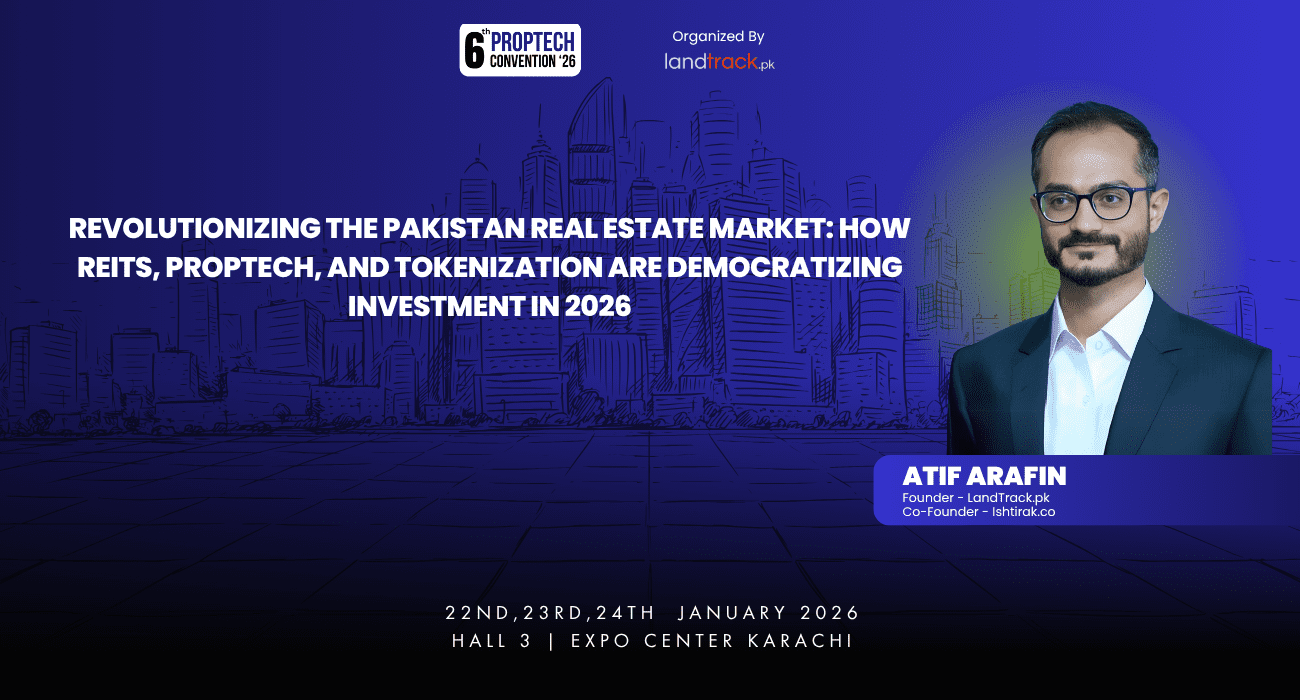
At the 6th PropTech Convention 2026, this transition was not just discussed—it was codified. Delivering the keynote address, Atif Araffin set a visionary yet grounded tone for the ecosystem, stating a profound truth about the local market: real estate has always moved in Pakistan, but what it hasn’t done is evolve with intent. This convention was never meant to be just another event; it serves as a critical checkpoint where the industry pauses, reflects, and strategizes what comes next. Built by an entire ecosystem rather than a single organization, the convention brought together developers, regulators, and innovators into one room.
Through sweeping SECP regulatory updates, the launch of groundbreaking digital platforms, and the injection of targeted venture capital, Pakistan is cementing its place in the global digital asset economy. In this comprehensive analysis, we will deconstruct the keynote’s major announcements, explore the three-day industry roadmap, and evaluate how the alignment of technology and regulation is democratizing property investment. For a deeper dive into the event’s announcements and how regulatory frameworks are evolving, you can explore this comprehensive analysis on REITs Pakistan & PropTech: 2026 Real Estate Future.
The Journey to Alignment: 2022 to 2026
To understand the magnitude of the announcements at this year’s convention, we must look at the intentional trajectory the industry has taken. During his address, Araffin mapped out a strategic four-year evolution that highlights how the market matured from basic conceptualization to hard execution:
2022: The journey began with foundational awareness, initiating conversations that were previously absent from the traditional real estate sector.
2023: These initial dialogues transformed into hard, necessary questions regarding the industry’s inefficiencies.
2024: The industry began putting structural frameworks around those complex questions.
2026: Today, the ecosystem has finally achieved alignment—specifically, the alignment between data, capital, ownership, and execution.
Data now actively drives critical development decisions, capital is becoming smarter, and ownership is no longer one-dimensional. Digital Real Estate is no longer a fringe concept but the core methodology for future urban planning and investment. The traditional, paper-based “file” trading system is being replaced by verified, immutable ledgers.
Bridging Borders: The Launch of ishtirak.co
Perhaps the most highly anticipated moment of the keynote was the official introduction of a platform designed to bridge international capital with regional real estate opportunities. Over the past year, the conversation surrounding property accessibility expanded beyond Karachi, reaching financial hubs in Dubai and Saudi Arabia. The core questions driving this expansion were simple yet critical: How do we unlock access, lower entry barriers, and build the trust required for massive scale?.
The answer presented at the convention is ishtirak.co.
Building the narrative on a real-world asset (RWA) tokenization platform, ishtirak.co is engineered to make real estate far more accessible, fractional, and transparent. The platform is registered in Dubai, holds an entrepreneurial license in Saudi Arabia, and is backed by TECOM in Dubai.
By operating across these strategic jurisdictions, ishtirak.co is built with a singular, uncompromising goal: widening market access without sacrificing regulatory governance. This is the very definition of Real Estate Tokenization Pakistan 2026. By tokenizing high-yield assets, platforms like ishtirak.co allow retail investors and overseas Pakistanis to participate in the market via Fractional Ownership. Instead of requiring tens of millions of rupees to purchase a commercial asset, investors can hold secure, blockchain-verified tokens that represent a fraction of that property, earning proportional rental yields and capital appreciation.
The SECP Backbone: Making Tokenization Viable
While the technology behind platforms like ishtirak.co is revolutionary, it relies entirely on a compliant legal environment to function safely in Pakistan. This is where the Securities and Exchange Commission of Pakistan (SECP) has provided the necessary scaffolding.
To ensure platforms offering Fractional Ownership can operate legally, the SECP completely revamped the Real Estate Investment Trust (REIT) Regulations of 2022. This regulatory overhaul was designed to:
Simplify Listings: The SECP clarified timelines for the transfer of real estate and Special Purpose Vehicle (SPV) shares. This directly promotes the early listing of REIT schemes on the Pakistan Stock Exchange (PSX), injecting vital liquidity into the market.
Ensure Shariah Synchronization: By aligning developmental and rental REIT frameworks with Islamic finance principles, the SECP has made it entirely viable for platforms to offer Shariah-compliant digital assets.
Clarify Asset Definitions: The strict delineation between active and passive real estate income ensures that investors are protected from systemic risks, creating a safer environment for digital asset generation.
Pioneers in the local market, such as DAO PropTech, have consistently championed these regulatory sandbox environments, proving that when governance meets innovation, the entire economy benefits. Furthermore, adjacent assets are seeing similar benefits, as demonstrated when Fasset Secures Sandbox License to Launch Pakistan’s First Tokenized Gold Solution, paving the way for broader digital asset adoption.
Fueling the Future: Pakistan’s First PropTech Fund
Technology is only as effective as the capital driving it. Recognizing that Smart Capital is required to scale these solutions, Atif Araffin proudly introduced Pakistan’s first PropTech Fund.
Unlike generalized venture capital, this is a curated fund focused on startups that are solving real problems for the Pakistani real estate ecosystem. The mandate of the fund is precise, targeting innovations in land records, digitization, compliance, and AI-driven automations.
The demographic imperative behind this fund is staggering. With 65% of Pakistan’s population comprising the young generation, there is an immense pool of native digital talent. The PropTech Fund ensures that this talent and capital are utilized appropriately. By backing these specialized startups, the industry is ensuring that Smart Capital replaces speculative hoarding, generating returns through operational efficiency and technological scale.
The Three-Day Execution Roadmap
To prove that the PropTech Convention 2026 is about tangible execution rather than empty rhetoric, the event was structured meticulously over three days, with everything intentionally set by the day’s narrative:
Day 1: Foundation and Hospitality: The inaugural day focused heavily on laying the groundwork, covering the foundation, tourism, and branded residences.
Day 2 (Jan 23rd): Systems and Financial Integration: The second day shifted focus to the systemic backbone required for scale, specifically financial literacy in collaboration with the State Bank of Pakistan. Highlighting the importance of institutional support, the day featured insights from Mr. Mirage, Managing Director at the State Bank, and explored digital payments, sustainable architecture, and industrial growth.
Day 3: Execution and The AI Hackathon: The final day was dedicated entirely to execution, bringing academia and industry to work together. This culminated in an AI hackathon designed to establish a clear roadmap for the betterment of the real estate industry.
Conclusion: A New Blueprint for Pakistan
The 6th PropTech Convention 2026 has firmly established that the era of opaque, inaccessible property trading is ending. We are witnessing the birth of a formalized, tech-enabled market.
Through the visionary launch of cross-border tokenization platforms like ishtirak.co, the ecosystem is proving that Fractional Ownership is the ultimate key to democratizing wealth. Simultaneously, the strategic deployment of the PropTech Fund guarantees that local startups have the financial runway to digitize archaic land records and automate compliance.
None of this would be sustainable without the SECP’s proactive regulatory reforms and the State Bank of Pakistan’s support for digital payment integrations. Capital is indeed becoming smarter, and ownership is no longer one-dimensional. By evolving with intent, Pakistan is not just upgrading its real estate market; it is actively building a transparent, inclusive, and highly lucrative Digital Real Estate economy.
Frequently Asked Questions
What is the PropTech Fund announced in Pakistan?
Pakistan’s first PropTech Fund is a curated investment vehicle targeting startups focused on land records, digitization, and AI-driven automations. It aims to deploy smart capital to empower the country’s 65% youth demographic in solving real estate challenges.
How do the new SECP regulations impact real estate tokenization?
The revamped 2022 SECP REIT regulations simplify exchange listings and ensure Shariah synchronization. This regulatory scaffolding clearly defines real estate asset classes, creating a legally compliant environment for tokenization platforms to offer secure, fractional ownership in Pakistan.
What is the ishtirak.co platform?
Ishtirak.co is a real-world asset tokenization platform introduced at PropTech Convention 2026. Registered in Dubai and active in Saudi Arabia, it is built to widen access to real estate investment while maintaining strict, uncompromising governance for Pakistani and GCC investors.
What is Fractional Ownership in Pakistani real estate?
Fractional ownership allows multiple individuals to buy digital shares of a high-value property. By lowering the financial barrier to entry, retail investors can earn proportional rental yields and benefit from capital appreciation without needing massive upfront capital.
Did PropTech Convention 2026 address Shariah-compliant real estate?
Yes. The convention highlighted the SECP’s regulatory shifts that align developmental and rental REIT frameworks with Islamic finance principles, making Shariah-compliant digital real estate assets viable and accessible for domestic and diaspora investors.
How will real estate tokenization help overseas Pakistanis?
Tokenization platforms provide secure, transparent, and legally compliant cross-border gateways. Using blockchain technology, overseas Pakistanis and GCC investors can remotely verify asset ownership and deploy capital directly into the local property market with automated returns.
Can I Really Buy Real Estate in Pakistan for Just a Few Thousand Rupees?
Yes, through fractional ownership models driven by tokenization, the massive capital requirements of traditional real estate are removed. You can buy digital tokens representing a small, affordable percentage of a premium property, opening the market to everyday retail investors.
How Does Real Estate Tokenization Work in Pakistan?
It works by converting the legal rights of a physical property into digital tokens on a blockchain. Governed by SECP guidelines, these tokens represent fractional shares of the asset. Smart contracts then automate the distribution of rental yields and track capital appreciation transparently.
Is Real Estate Tokenization a Scam or Legitimate Investment?
It is a highly legitimate and regulated investment when facilitated through approved platforms. The SECP and the Virtual Assets Ordinance frameworks ensure strict KYC, Shariah compliance, and transparency, offering a secure alternative to the historically opaque “file” trading system.
What's the Difference Between Tokenized Real Estate and Mutual Funds?
While mutual funds pool money to invest in a broad portfolio of properties or stocks managed by a third party, tokenized real estate allows you to directly select and own a fractional piece of a specific underlying property, giving you more granular control over your investment.
How Do I Know If a Real Estate Tokenization Platform Is Trustworthy?
A trustworthy platform explicitly operates under SECP guidelines, the Regulatory Sandbox, or international equivalent authorities. Look for transparent governance, blockchain verification mechanisms, and proper regulatory backing. For instance, platforms like ishtirak.co prioritize regulatory compliance across multiple jurisdictions.
How Do I Sell My Tokenized Real Estate Shares?
Tokenization injects unprecedented liquidity into the property market. Because the assets are digitized on a blockchain, secondary trading can happen near-instantaneously on regulated digital asset exchanges, allowing you to exit your investment much faster than traditional property sales.