

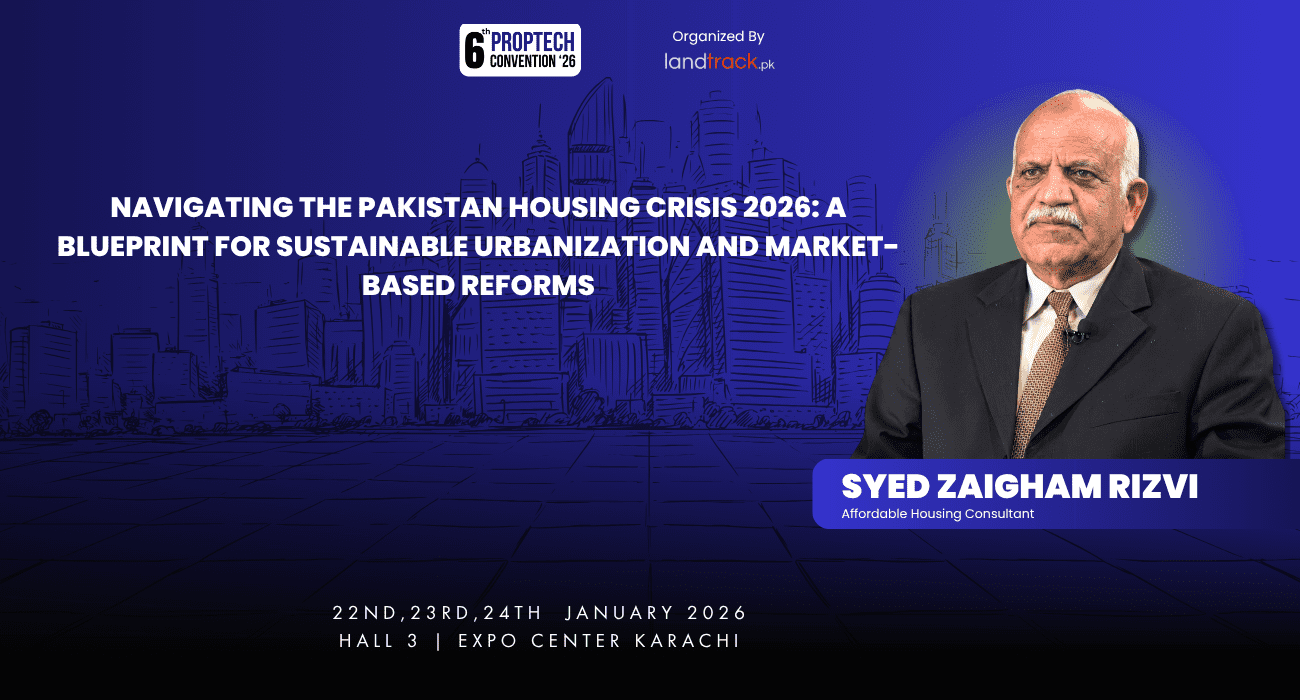
As we look toward the future of real estate, infrastructure, and urban development in South Asia, the pakistan housing crisis 2026 stands out as a critical, multi-dimensional challenge demanding immediate, innovative, and market-driven solutions. For real estate investors, urban planners, and policymakers, understanding the intricacies of this shortfall is no longer optional—it is an absolute prerequisite for participating in one of the most dynamic, albeit complex, emerging markets in the region.
Recent insights drawn from a landmark zaigham rizvi speech—a focal point of discussion leading up to major industry events like the highly anticipated PropTech Convention 2026—shed a glaring light on the systemic bottlenecks that have historically crippled the sector. By analyzing these translated facts and expert observations, we can construct a comprehensive roadmap for addressing the pakistan housing crisis through deep structural reform, robust financial mechanisms, and equitable development strategies.
The Urban Migration Challenge and the Karachi Housing Shortage 2026
Rapid urbanization is a defining demographic shift of the 21st century, and Pakistan is currently at the epicenter of this transformation. As vast populations move from rural agricultural areas to urban commercial centers in search of economic opportunity, healthcare, and education, the cities are buckling under the immense pressure.
Neelam Colony: A Case Study in Untapped Potential
The phenomenon of urban migration has profoundly impacted major metropolises, particularly the economic hub of Karachi. The city’s landscape is now heavily dotted with informal settlements, locally known as ‘katchi abadis’. A prominent and highly illustrative example highlighted by Zaigham Rizvi is ‘Neelam Colony’, an informal settlement situated in remarkably close proximity to the highly affluent Defense (Phase 5) area.
The juxtaposition of extreme wealth and informal housing presents a unique economic paradox. Rizvi notes that the land value of these specific informal settlements, especially those located near premium zones like Defense, is conservatively estimated to be worth billions of rupees. This staggering valuation indicates that the impending karachi housing shortage 2026 is not merely an issue of a lack of available land. Rather, it is a complex issue of land utilization, zoning regulations, and the legal integration of marginalized spaces into the formal municipal grid.
Market-Based Solutions for Slum Redevelopment Pakistan
For decades, the traditional approach to managing informal settlements in many developing nations has revolved around heavy state intervention. Historically, this has often veered into forced evictions, bulldozing, or heavy-handed government mandates that displace vulnerable populations without offering viable alternatives. However, modern urban planning pakistan housing strategies dictate a dramatic and necessary pivot away from these outdated methods.
Rejecting Coercion for Commercial Viability
To genuinely resolve the housing deficit and integrate these highly valuable lands into the formal economy, Rizvi explicitly argues that stakeholders must embrace a ‘market-based’ model instead of relying on government force or coercive measures. By incentivizing private developers to actively participate in slum redevelopment pakistan, we can create a sustainable win-win scenario. Developing these areas through market-driven frameworks ensures that the current residents are provided with better, upgraded homes on-site, while developers and real estate investors can simultaneously unlock and capitalize on the massive underlying land value.
Learning from International Models
To implement effective affordable housing pakistan 2026 initiatives, we do not need to reinvent the wheel. Successful, scalable paradigms exist across the global south. The slum redevelopment models successfully implemented in countries like Thailand and Brazil serve as prime examples of how informal settlements can be upgraded and seamlessly integrated into the broader urban fabric. By adopting and localizing elements of these international successes, Pakistan can foster true sustainable urbanisation pakistan that respects community property rights while stimulating immense economic activity in the construction sector.
Core Issues in Real Estate Policy Pakistan
To successfully transition from scattered, ad-hoc housing projects to a mature, resilient real estate ecosystem, we must critically dissect the foundational vulnerabilities of the sector. According to expert analysis, the overarching hurdles can be categorized into three fundamental deficits that continue to stifle market growth.
Supply, Finance, and the Missing Regulator
The housing sector in Pakistan is primarily plagued by three major issues: a severe lack of supply to meet population growth, inadequate end-user financing mechanisms, and—most critically—the complete absence of a unified regulatory authority.
Addressing the supply-side economics requires overcoming severe bureaucratic red tape and complex land acquisition hurdles. On the financial front, the modernization and integration of institutions like the House Building Finance Company is absolutely essential for scaling hbfc housing finance pakistan initiatives. Achieving comprehensive housing finance reform pakistan—supported by robust policy frameworks like the State Bank of Pakistan’s infrastructure and housing finance guidelines—is the only viable way to make mortgage finance pakistan 2026 accessible to the middle and lower-middle classes. Expanding mortgage penetration will ultimately bridge the widening gap between housing supply and the actual purchasing power of the average citizen.
The Urgent Need for RERA Pakistan Housing Reform
Perhaps the most glaring disparity between Pakistan’s real estate market and those of its rapidly developing neighbors is the severe regulatory void. For instance, Rizvi points out that India has successfully established the Real Estate Regulatory Authority (RERA) to systematically monitor and regulate property developers, ensuring project delivery and protecting consumer investments. In stark contrast, Pakistan currently lacks any such comparable regulatory system across its provinces.
The absence of a finalized, legally binding framework for a rera pakistan housing reform means that both local and overseas investors have historically faced disproportionately high risks of fraud, indefinite project delays, and severe capital mismanagement. Instituting a strict, transparent regulatory body is the non-negotiable first step toward restoring institutional investor confidence. Fortunately, the discourse is actively shifting, with growing advocacy for establishing an active Real Estate Regulatory Authority gaining significant traction in legislative policy circles. This momentum is actively laying the necessary groundwork for a secure, trustworthy environment for low cost housing pakistan.
Historical Context and Academic Gaps in Urban Planning
Understanding exactly why the pakistan housing crisis persists requires a retrospective look at both the political history of national housing schemes and the academic environment that informs the country’s urban policy.
Political Schemes: From ‘Roti, Kapra, aur Makan’ to Modern Failures
Historically, housing in Pakistan has been heavily politicized, often launched as populist campaigns without the requisite technical or financial backing. The famous political slogan of Zulfikar Ali Bhutto in the 1970s, ‘Roti, Kapra, aur Makan’ (Food, Clothing, and Shelter), remains a frequently discussed cornerstone of Pakistan’s political housing discourse.
However, catchy slogans do not equate to sustainable real estate policy pakistan. A critical examination of past initiatives, such as the ambitious housing program launched during the Junejo era, reveals significant structural and planning flaws. That particular program ultimately failed because it was executed hastily without providing the necessary basic infrastructure. Building concrete walls and roofs without connecting them to municipal water, sanitation, and power grids is merely a recipe for creating new urban slums rather than resolving the fundamental housing shortage.
The Dearth of Academic Research
A major, often overlooked factor contributing to these repeated policy failures is the intellectual and academic vacuum surrounding urban planning in the country. Housing as a specialized, interdisciplinary subject is not formally or systematically taught within the majority of universities in Pakistan. Consequently, there is a profound lack of local research, data-driven understanding, and academic rigor dedicated to this vital economic sector.
When compared to regional counterparts, the situation is quite stark. The level of independent research conducted on the topic of housing in Pakistan is virtually negligible when measured against the academic output of neighboring countries like Bangladesh and India. Without a robust academic foundation to generate localized, data-driven policies, the country will continue to struggle with enacting meaningful structural reforms.
PropTech, Innovation, and the Digital Future
Despite the immense historical and regulatory challenges, there are bright beacons of innovation pointing toward a digitized, transparent future for the real estate sector. Modernizing property technology (PropTech) is crucial for accurate data dissemination, market analysis, and consumer protection.
The ACASH Portal: A Google-Recognized Success
One of the most significant strides in aggregating housing data and providing professional advisory services occurred five years ago with the creation of a sophisticated web-based housing information portal named ‘ACASH’ (Advisory Center for Affordable Settlement and Housing).
This initiative proved beyond a doubt that localized technological solutions can achieve massive global resonance. The ACASH portal has garnered immense popularity on an international scale. Its unique, user-centric approach to mapping housing information was so effective and innovative that it was officially recognized and adopted by Google. Such technological milestones highlight the immense potential for digital tools to support and accelerate sustainable urbanisation pakistan, providing the precise data necessary for informed private investment and public policy-making.
Expanding the Knowledge Base
For practitioners, investors, and policymakers looking to delve deeper into these frameworks, comprehensive literature is finally becoming available. Zaigham Rizvi has compiled a detailed and expansive outline of Pakistan’s various housing policies, meticulously chronicling their respective successes and failures, into a dedicated, commercially available book. Although the e-commerce giant Amazon does not have a direct operational presence in Pakistan, these crucial books remain available for international purchase on the platform. Accessing this consolidated, expert knowledge is vital for anyone looking to actively participate in resolving the nation’s infrastructure deficits.
Conclusion: A Collaborative Roadmap for Affordable Housing Pakistan 2026
The future trajectory of Pakistan’s real estate sector depends entirely on moving away from isolated, politically motivated construction projects toward a holistic, ecosystem-driven approach. The insights distilled from the zaigham rizvi speech make it unequivocally clear: the path forward requires establishing a formidable, independent regulatory body to enforce rera pakistan housing reform, empowering educational institutions to deeply study urban planning pakistan housing, and pivoting to commercially viable, market-based slum redevelopment pakistan.
Furthermore, unlocking robust, accessible mortgage finance pakistan 2026 pipelines will finally turn the elusive dream of low cost housing pakistan into an economic reality for millions of citizens. As we approach critical industry milestones and the ongoing karachi housing shortage 2026 intensifies, it is the deliberate synergy of private investment, technological innovation (exemplified by the ACASH portal), and sound real estate policy pakistan that will ultimately dismantle the crisis. By embracing these reforms, Pakistan can lay the permanent foundations for a thriving, equitable, and sustainable urban future.
Frequently Asked Questions
What is the solution to the Karachi housing shortage 2026?
The solution lies in adopting a market-based slum redevelopment model rather than state coercion. By incentivizing private developers to upgrade informal settlements like Neelam Colony, residents get better homes while unlocking billions in underlying land value.
Why does Pakistan need a RERA-style housing reform?
Pakistan needs a Real Estate Regulatory Authority (RERA) to protect investors from fraud, prevent project delays, and regulate developers. This transparent framework is essential to restore institutional confidence and attract funding for sustainable urban development.
What are the primary causes of the Pakistan housing crisis 2026?
The crisis is driven by rapid rural-to-urban migration, an immense lack of housing supply, inadequate end-user mortgage financing, and the critical absence of a unified, national real estate regulatory body.
How can affordable housing in Pakistan be achieved by 2026?
Achieving affordable housing requires comprehensive housing finance reforms. By expanding mortgage accessibility through institutions like the HBFC and adopting PropTech innovations, homeownership can become economically viable for the middle and lower-middle classes.
What were Zaigham Rizvi's key recommendations for the real estate sector?
Zaigham Rizvi strongly advocates for implementing strict RERA regulations, shifting to commercially viable slum redevelopment, and introducing formal academic research in urban planning to replace politically motivated, ad-hoc housing schemes.
What is the ACASH portal and why is it important?
The Advisory Center for Affordable Settlement and Housing (ACASH) is a web-based housing information portal. Globally recognized and adopted by Google, it provides crucial, transparent data to support informed policy-making and sustainable urbanization in Pakistan.
Why have past political housing schemes in Pakistan failed?
Historically politicized schemes, such as those launched under the slogan ‘Roti, Kapra, aur Makan’, faild because they lacked technical planning. They often built physical structures without providing essential infrastructure like water, sanitation, and electricity grids.
How does market-based slum redevelopment benefit the economy?
Market-based redevelopment upgrades living conditions for marginalized communities without forced evictions. Simultaneously, it allows private investors to legally develop highly valuable urban land, stimulating massive economic activity and job creation in the construction sector.
How can international models improve Pakistan’s housing policies?
Pakistan can adopt successful slum redevelopment frameworks from countries like Thailand and Brazil. These international models demonstrate how to seamlessly integrate informal settlements into the formal urban grid while respecting community rights and stimulating investment.
Why is there a lack of academic research on housing in Pakistan?
Housing and urban planning are not formally or systematically taught in most Pakistani universities. This academic vacuum prevents the creation of data-driven policies, leaving Pakistan far behind neighboring countries like India and Bangladesh in urban research.