

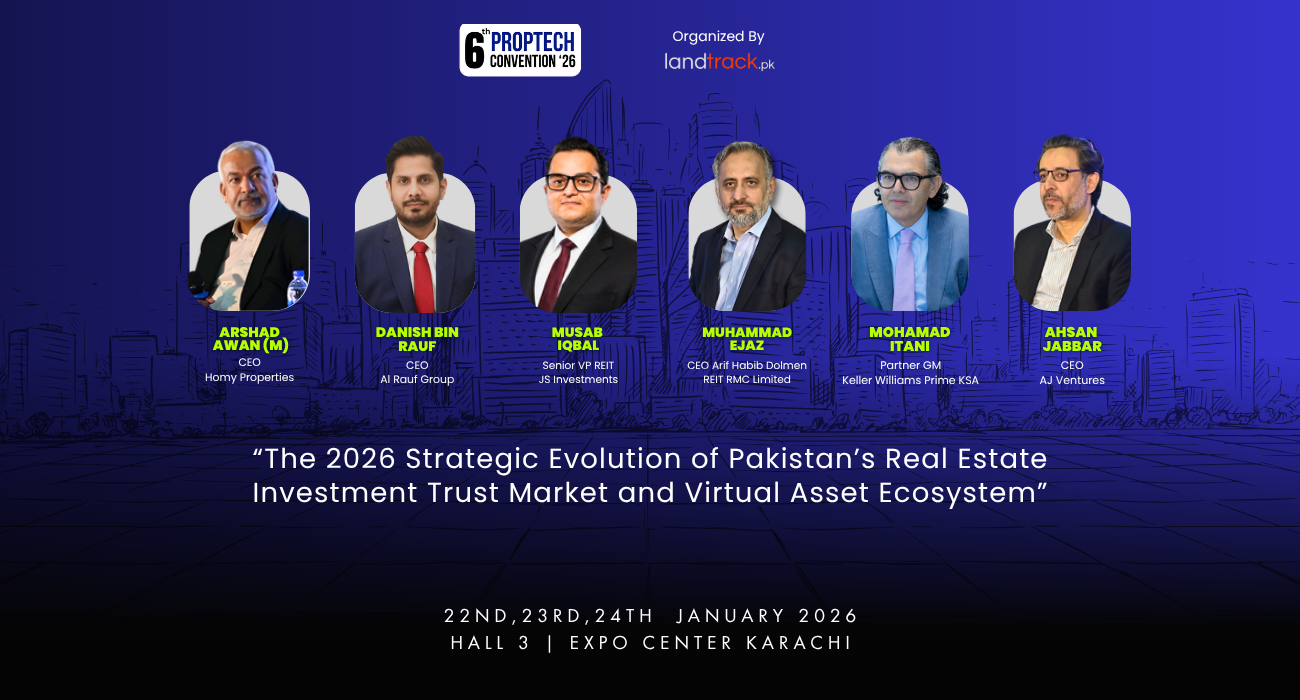
The formalization of the Pakistani real estate sector has reached a critical inflection point in 2026, transitioning from an opaque, fragmented landscape of individual holdings and informal “Hujra” communal management into a sophisticated, digitally-integrated financial asset class. This structural metamorphosis is being driven by a coordinated effort between the Securities and Exchange Commission of Pakistan (SECP), the newly established Pakistan Virtual Assets Regulatory Authority (PVARA), and major institutional players like JS Investments and Arif Habib Dolmen REIT Management.
The convergence of Real Estate Investment Trusts (REITs) and blockchain-based tokenization represents more than a technological upgrade; it is a fundamental re-engineering of how capital is mobilized in South Asia’s real estate markets. The Reit pakistan 2026 landscape demonstrates that Pakistan has successfully navigated the transition from an unregulated digital frontier to a structured, institutionalized marketplace. This comprehensive analysis synthesizes current market dynamics, regulatory shifts, and technological innovations, incorporating direct insights from leading industry voices to chart the future of property investment pakistan.
Macroeconomic Foundations Fueling the Pakistan REIT Market
The emergence of a robust pakistan reit market cannot be separated from the broader economic stabilization achieved under the International Monetary Fund’s (IMF) reforms-oriented $7 billion program. This newfound macroeconomic stability has fostered a declining interest rate environment, which currently sits at approximately 10.5%. By lowering the cost of borrowing, the State Bank of Pakistan (SBP) has created a fertile ground for equity market participation and made REIT yields highly attractive to both institutional and retail investors.
The Pakistan Stock Exchange (PSX) has strongly reflected this renewed investor confidence. The KSE-100 index experienced strong bullish momentum, reaching historic highs of 182,384 points in May 2026, with projections suggesting a continued capital inflow pushing the index to 208,000 points by the end of the calendar year. This macroeconomic backdrop has facilitated a surge in Initial Public Offerings (IPOs). The PSX expects a record decade-high pipeline of 12 new listings in 2026, aimed at raising approximately PKR 25 billion ($89.3 million).
These listings cover a diverse range of sectors, but the reits pakistan 2026 pipeline is notably dominant, reflecting a shift in investor appetite from speculative land holding toward documented, income-generating assets. As of January 2026, the total number of registered REIT schemes in Pakistan has risen to an impressive 28, signaling a massive formalization of the sector.
Fractional Ownership Pakistan: Ijaz’s ‘Property Share’ Model
Historically, a massive barrier to entry has hindered the average citizen’s ability to participate in the real estate boom. Traditional property investment often excluded the middle and lower-middle classes, confining high-yield opportunities to institutional players and ultra-high-net-worth individuals.
However, fractional ownership in pakistan has emerged as a revolutionary solution to this capital barrier. During the PropTech panel discussion, industry expert Ijaz articulated a vision for the democratization of real estate through the ‘Property Share’ model. Stressing the power of micro-investments, Ijaz noted, “If every Pakistani saved 1 rupee a day, we could save 25 crore daily… that pooling of resources is a very high-potency instrument and vehicle”.
Explaining the mechanics of this system, Ijaz clarified: “Property Share is almost equal to the concept of REIT… A 1200 square foot apartment cannot be bought by one person, so they can buy 100 square feet. We have given that 100 square feet the shape of an enforceable contract under contract law”.
Democratizing Access and Social Implications
The Globe Residency REIT (GRR) has operationalized this concept through its digital innovation platform, PropertyShare.com.pk. This platform allows investors to participate in regulated residential development projects with investments starting as low as 100 square feet. The market receptivity to fractional ownership pakistan has been outstanding; Globe Residency REIT financial reports confirm total net sold units reached 899 out of an inventory of 1,639, with cumulative sales amounting to PKR 14.25 billion and a robust 93% installment recovery rate.
Furthermore, fractional ownership in pakistan 2026 serves a vital social function. The historical lack of documented property rights systematically disadvantaged women, frequently leading to inheritance disputes. By moving property ownership into a unitized, REIT-based digital ledger held in a Central Depository Company (CDC) account, the market provides a transparent, enforceable record of ownership.
Institutional Momentum: JS Bank/Investments and the 2026 REIT IPO Pipeline
Institutional commitment is a core driver of the mature reit pakistan ecosystem. Mustafa, representing JS Investments Limited (JSIL)—Pakistan’s oldest private sector asset management company—highlighted a strategic shift toward rental-based income models and institutional-grade property management.
Mustafa clearly defined the value proposition of these financial vehicles: “REIT is the first vehicle that allows the fractionalization of real estate… an asset that is out of reach for a common investor today from an investment perspective, a REIT allows them to participate in it”.
The JS Rental REIT and Stock Exchange Listings
A central pillar of this growth strategy is the JS Rental REIT, which received approval for its public offering from the SECP and applied for listing on the PSX Main Board. According to the JS Rental REIT PSX listing notice, the scheme is a closed-end Rental Non-PPP REIT that holds the leasehold rights to seven floors of “The Centre,” a prime commercial building in the Saddar district of Karachi.
Looking ahead, Mustafa emphasized the importance of variety: “We see a variety of REITs coming into the country and especially on PSX… this helps investors massively in diversifying their portfolios”.
To fast-track this development, the SECP finalized pivotal 2026 procedural updates requiring all rental and investment-based REIT schemes to be mandatorily listed on the stock exchange within one year of the date of transfer of the real estate.
Real Estate Tokenization Pakistan: The Regulatory Sandbox and PVARA
While the REIT framework represents the bedrock of formalization, the most technically advanced frontier is real estate tokenization 2026. The legislative landscape transformed with the enactment of the Virtual Assets Act 2026, which formally established the PVARA as a permanent regulator overseeing all Virtual Asset Service Providers (VASPs).
Naeem Khanani, CEO of DigiEstate and a board member of Arif Habib Dolmen REIT, has been instrumental in bridging the gap between traditional real estate finance and Distributed Ledger Technology (DLT). Explaining the structural differences, Naeem noted, “Tokenization is not centralized; it is not exchange-controlled… so its settlement processes are inherently in its protocol”. He further affirmed the industry’s readiness, stating, “We are REIT-ready… and we are trying to ensure that for tokenization, Pakistan adopts the framework of REIT regulations”.
Bridging Distributed Ledger Technology with Real Assets
PVARA has introduced a highly structured Regulatory Sandbox, functioning through an “innovate and regulate” model. The sandbox testing period can run up to 18 months and follows a strict four-stage process :
Application & Scoping: Assessing the viability, detailed proposal, risk framework, and exit strategy.
Technical Review: Evaluating system integrity, custody models, cybersecurity, and AML/KYC readiness.
Live Testing: Operating with real users under defined transaction caps to validate the market.
Transition: Graduating to a full-scale VASP license for broader market operations.
Another panelist, Ahsan, expanded on the necessity of trust in these new systems: “The most important thing to look at right now is not just youth, it’s about investors period… The world’s investor is going to Dubai for one reason: reliability. We need to establish ourselves as a country, and the industry has to regulate itself”. Ahsan also predicted sector-specific growth, suggesting, “I think hospitality could really benefit from the tokenization of property”.
Synergy: REITs & Real Estate Tokenization 2026
Are REITs and Tokenization competitors? The consensus at the PropTech Convention 2026 was that the convergence of reits & real estate tokenization 2026 will create massive synergies.
International expert Muhammad Itani highlighted that this dual-track evolution is mirroring a massive global shift. He explained the dual benefits: “For the developer, it is a new way to raise money for his projects, and for the end user or investor, it is a lower ticket price”. Providing a macro perspective, Itani projected, “This market will increase to 4 trillion by 2032 US dollars in real estate only”.
Furthermore, Pakistan’s strategic integration of tokenization aligns heavily with its macroeconomic reliance on cross-border payments and remittances. The PVARA framework allows for the use of stablecoins for remittances, potentially reducing the cost of transferring funds while providing an SECP-governed structure palatable for global investors.
Blockchain Real Estate Pakistan: Security, KYC, and the Future
For blockchain real estate pakistan to truly scale, the technical infrastructure must be unassailable. PVARA and SECP enforce stringent cybersecurity architecture guidelines. A primary focus is on “custody”—securely managing the private keys that control digital tokens while legally tying them to the underlying physical property.
To safeguard Pakistan’s standing with the Financial Action Task Force (FATF), the 2026 framework mandates robust Anti-Money Laundering (AML) and Know Your Customer (KYC) protocols. The SECP demands biometric verification, IBAN integration, and Ultimate Beneficial Ownership (UBO) disclosures, actively preventing the illicit use of the virtual asset ecosystem.
Conclusion: A New Era for REIT Pakistan 2026
The structural maturity witnessed in 2026 marks the end of speculative, paper-based plot trading. The era of illiquidity is being systematically dismantled by the joint forces of institutional REIT pipelines and blockchain-enabled fractional shares. The Prime Minister’s directive to urgently operationalize the virtual assets framework solidifies this commitment from the highest levels of government. For investors, the strategic evolution of the Pakistani real estate sector provides a transparent, liquid, and highly lucrative opportunity.
Frequently Asked Questions
What are the top real estate development strategies in Pakistan for 2026?
The top real estate development strategies in Pakistan for 2026 focus on shifting from speculative “Build to Sell” models to sustainable “Build to Operate” frameworks, integrating proptech, and offering “Real Estate as a Service” through shared amenities.
How does capital discipline affect large-scale construction projects?
Capital discipline ensures large-scale construction projects only receive funding when 70% of physical infrastructure is complete. This mitigates speculative risks, rebuilds investor trust, and ensures consistent project delivery in the market.
What was the key takeaway from the PropTech Convention 2026?
The PropTech Convention 2026 highlighted that Pakistan’s property sector must embrace AI, blockchain tokenization, and recurring revenue models to achieve long-term market sustainability and attract institutional capital.
How are builders and developers in Pakistan improving market sustainability?
Builders and developers in Pakistan are improving market sustainability by adopting climate-conscious designs, utilizing AI to reduce construction waste, and prioritizing vertical density over unplanned urban sprawl.
What is the "Build to Operate" model in the real estate industry?
The “Build to Operate” model involves developers retaining ownership of commercial spaces, coworking floors, or amenities to generate perpetual rental income, rather than selling the entire project upfront.
Why is property investment in Pakistan shifting toward vertical density?
Property investment is shifting toward vertical density in cities like Karachi and Lahore due to severe land scarcity, high land costs, and the rising consumer demand for secure, high-yield urban housing.
How are sports and community spaces changing urban development in Pakistan?
Urban development in Pakistan now integrates sports facilities and “Maidans” to act as social multipliers. These amenities promote mental well-being, community cohesion, and increase long-term property valuations.
What role does the Apna Ghar scheme play in sustainable growth in real estate?
The PKR 321.96 billion Apna Ghar scheme drives sustainable growth in real estate by funding 500,000 affordable homes. It acts as a massive economic multiplier, stimulating allied industries like cement and steel.