

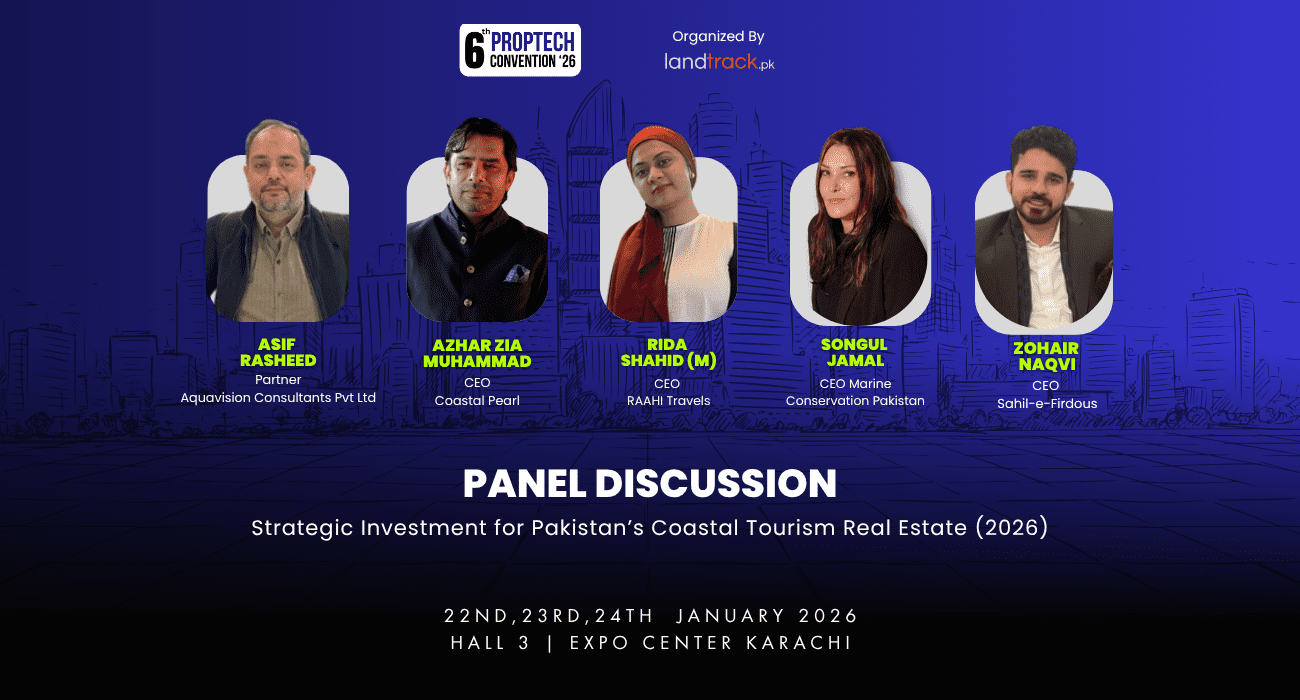
The real estate and tourism sectors in Pakistan are undergoing a fundamental transformation in 2026, transitioning from a decade of speculative, land-based trading toward a high-utility, technology-driven ecosystem. The pakistan property market 2026 is witnessing an evolution that is most visible in the strategic pivot toward the Blue Economy, an initiative that recognizes the nation’s maritime territory as a “sixth province” capable of diversifying the national economy beyond traditional land-centric models. As the traditional reliance on northern mountainous tourism is being challenged by the untapped potential of the Sindh and Balochistan coastlines, we present a comprehensive analysis of this shift. This framework is designed to help investors, developers, and policymakers understand the emerging landscape.
The Blue Economy: A Strategic Asset for National Transformation
The concept of the Blue Economy has evolved into a central pillar of national economic strategy. While the sector currently contributes only approximately 1% to the national GDP, projections suggest a potential $100 billion contribution by 2047 if structured correctly. Pakistan possesses an extensive coastline that varies in measured length between 1,001 km and 1,046 km for the mainline, extending up to 1,300 km when including the intricate creek systems of the Indus Delta.
During the recent PropTech Convention 2026 panel, industry leaders brought intense focus to this 1,300km coastline, highlighting it as a massively underutilized asset. Speakers drew a sharp contrast with international models, specifically noting that in Morocco, coastal areas are highly active; beaches routinely empty cities on weekends as citizens engage in camping, events, and family recreation. In stark contrast, local shores remain critically unmanaged, lack essential infrastructure, and fail to cater to both local and international tourists. This disparity signals a highly lucrative opening for coastal development pakistan and broad coastal real estate pakistan initiatives.
Analysis and Translation of Frameworks
The convention served as the primary forum for articulating the structural shifts required to modernize the sector, focusing on moving the industry from a “Dream” phase to a “Machinery” phase. The underlying theme was the creation of a “Digital Trust Layer,” designed to bring transparency to a historically opaque market.
For global capital exploring coastal real estate investment, understanding domestic market transitions is critical. Traditional “Parchi Trading” is moving toward regulated, blockchain-enabled fractional ownership models. Similarly, cash-based deposits are shifting to escrow-secured earnest money monitored by the State Bank of Pakistan. These integrations are ending the undocumented era of real estate, enforcing digital payment gateways into platforms to formalize the sector.
The Market Shift
For decades, pakistan tourism property narratives were dominated by the northern peaks. However, a significant market shift is cementing itself in 2026. Investors recognize that the northern regions suffer from severe seasonality, critical infrastructure gaps, road safety issues, and unreliable cellular coverage. Currency volatility has also pushed the prices of imported fuel and fittings higher, raising operating expenses for mountain resorts.
Consequently, the focus of destination development pakistan is pivoting toward the Makran Coastal Highway and the broader Balochistan coastline. This corridor offers extraordinary natural beauty and a clean slate for modern, master-planned developments with year-round operational viability. Locations such as Astola Island and Kund Malir provide opportunities for marine tourism and luxury beach camping, creating a more robust investment case for pakistan tourism property investment than seasonal mountain valleys.
Karachi’s Infrastructure Deficit
Karachi handles 95% of the country’s trade, yet it faces a paradoxical crisis in its hospitality sector. The city suffers from a severe deficit in international-standard 5-star hotel rooms and Tier-1 hospitality infrastructure. Panelists noted that the city has not seen significant new 5-star hotel development in 50 years, with several legacy hotels actually closing down.
Because of this stagnation, the local corporate sector struggles to find suitable, modern venues for annual conferences and executive meetings. Market analysis identifies this insufficient capacity as a major restraint on growth, negatively impacting the national CAGR by approximately -0.8%. Addressing this urban deficit is a primary target for hospitality investment pakistan. High-end developers prioritize utility reliability and commute times, making the city’s current infrastructure upgrades foundational to closing this gap.
Private Eco-Resorts and Sustainability
The vacuum left by traditional hotel infrastructure is currently being filled by private, full-package eco-resorts. These developments move away from the concrete models toward sustainable, experiential hospitality that integrates with the natural landscape.
The success of these models is already proven. Panelists highlighted how private resorts are aggressively capturing corporate demand; major entities are actively utilizing these newly developed, secure, full-service beach locations for corporate retreats. The demand for these managed residences with premium lifestyle services validates the immediate need for branded residences pakistan and eco tourism real estate.
However, scaling investment in coastal projects pakistan requires solving a critical operational bottleneck. The panel explicitly highlighted the critical need for skilled hospitality training and infrastructure. Currently, developers face a severe shortage of trained professionals. There is an absence of local institutes dedicated to professional housekeeping, specialized culinary services, and basic hospitality standards. Furthermore, activating the coastline requires outfitting resorts for water sports, which demands certified, licensed experts for diving and maritime safety. We see that without targeted training programs and government support for municipal infrastructure, maintaining high-end operations will remain challenging.
Integration and Strategic Outlook
Future projects must prioritize environmental sustainability to protect the exact assets they are monetizing. The 2026 eco-resort model relies heavily on integrating off-grid renewable energy, such as solar and offshore wind. Furthermore, developers are executing Nature-Based Solutions, incorporating the restoration of mangroves and coral reefs directly into the property’s value proposition. These strategies are foundational to modern marine conservation real estate.
Additionally, we observe the emergence of innovative cross-sector synergies. Concepts integrating shrimp aquaculture with eco-tourism are being explored, allowing resorts to offer sustainable, traceable seafood experiences directly to tourists while supporting local marine agriculture.
Conclusion
The transition of the national property market toward the Blue Economy is a permanent structural realignment. destination led development pakistan along the southern shores offers an unprecedented opportunity to build high-utility assets. By establishing a Digital Trust Layer, integrating sustainable architecture, and closing the 5-star hospitality gap, the sector is positioned to capture massive value. The future of real estate is digital, coastal, and sustainable, presenting high-yield returns for those who execute across these multiple dimensions simultaneously.
Frequently Asked Questions
Why is coastal development pakistan a massive opportunity?
It offers a year-round operational alternative to seasonal northern regions. The 1,300km coastline provides a clean slate for modern, sustainable eco-resorts, tapping into the emerging Blue Economy and drawing both local and international tourists.
What was discussed at the PropTech Convention 2026 panel regarding eco tourism real estate?
The panel emphasized transitioning to a “Digital Trust Layer” for transparent property transactions and highlighted the urgent need to address the hospitality training deficit to sustain high-end coastal eco-tourism projects.
How does the Blue Economy impact the property market?
Recognizing the maritime domain as a “sixth province” opens new avenues for marine conservation real estate, offshore energy, and luxury beachfront hospitality, potentially adding $100 billion to the GDP by 2047.
What is the main challenge for Karachi hospitality investment?
The city faces a severe 5-star hotel deficit. No significant luxury hotels have been built in decades, limiting corporate event venues and negatively impacting the national tourism growth rate.
Why are branded residences gaining traction in Pakistan?
Branded residences provide secure, full-service environments. High-net-worth individuals and corporate entities increasingly prefer managed eco-resorts for retreats and activations, ensuring consistent quality and premium lifestyle services.
How are digital land records changing real estate transactions?
Regulated, blockchain-enabled fractional ownership and State Bank-monitored escrow accounts are replacing opaque cash deposits. This ensures secure, verifiable property transfers and builds investor confidence.
What makes Balochistan ideal for destination led development?
The Makran Coastal Highway corridor features untapped natural assets like Astola Island and Kund Malir. It allows for master-planned, sustainable developments free from the severe winter closures of northern regions.
What sustainable practices are essential for new coastal projects?
Successful projects integrate off-grid renewable energy like solar and offshore wind. They also incorporate nature-based solutions, such as restoring mangroves and coral reefs, to protect the environment and attract eco-conscious travelers.