

The national real estate and urban development landscape in Pakistan has reached a critical inflection point. Moving away from a history of speculative land trading, the country is currently attempting a massive shift toward a high-utility, technology-integrated residential ecosystem. At the very heart of this transformation is the ambitious goal of addressing a persistent and widening housing shortfall. For policymakers, developers, and institutional investors, understanding the nuances of affordable housing pakistan 2026 is no longer optional—it is an economic imperative.
This comprehensive analysis unpacks the macro-economic drivers, legislative shifts, and innovative structural reforms that are actively shaping the future of real estate and urban planning in Pakistan today.
The Macroeconomic Urgency: Understanding the Pakistan Housing Crisis
To comprehend the scale of the crisis, one must look at the hard data. Currently, Pakistan faces a staggering housing deficit estimated at 10 million units , an issue compounded by the need for an additional 350,000 units annually due to rapid urbanization in Pakistan. But the issue extends far beyond merely providing a physical roof; it is deeply embedded in the national economy.
Zafar Masud, Chairman of the Pakistan Banks Association, highlights that the housing sector accounts for a massive 25% of core inflation. This undeniable link means that housing market dynamics and national interest rates operate in a continuous feedback loop. Any effective pakistan housing reform 2026 agenda must, therefore, address both supply-side bottlenecks and demand-side affordability constraints.
A primary obstacle remains the structural gap in formal housing finance. Consider the following realities:
In Pakistan, roughly 80% to 85% of housing is funded through personal savings or informal developer-led arrangements.
Formal mortgage lending in the country sits at a mere 3% to 5% of the GDP.
By contrast, regional neighbors like India boast a housing finance penetration rate closer to 10% to 12% of their GDP.
This glaring discrepancy represents a vast, untapped market for mortgage finance pakistan , provided that the institutional and legal frameworks can be adequately reformed to mitigate lender risks. To remedy this, international stakeholders have stepped in, notably through the World Bank’s Pakistan Housing Finance Project, which aims to significantly broaden the capital base for affordable mortgages.
Breaking the Financial Gridlock: Housing Finance Pakistan 2026
To catalyze financial inclusion housing pakistan, the federal government and regulatory bodies have initiated aggressive overhauls of the existing financial structures. Historically, one of the greatest barriers to long-term housing finance pakistan 2026 has been the absence of “patient capital”. Globally, 25-year mortgages are funded by deep pools of capital provided by pension funds and life insurance companies. However, in Pakistan, pension funds represent less than 1% of the GDP, leaving the system largely reliant on external commercial borrowing or international donor funding.
To counter this, the Economic Coordination Committee (ECC) of the Cabinet recently approved significant revisions to the Markup Subsidy and Risk Sharing Scheme in early 2026. These sweeping reforms include:
Enhanced Loan Ceilings: The maximum loan limit has been raised dramatically from PKR 3.5 million to PKR 10 million to reflect the rising costs of land and construction materials.
Uniform Subsidized Pricing: A uniform 5% end-user markup rate has been introduced across the board, replacing a previously convoluted tiered system where some users paid up to 8% under older State Bank of Pakistan markup subsidy frameworks.
Expanded Eligibility: The maximum house size eligibility has been doubled to 10 Marlas (2,720 sq ft), opening the door for middle-income families who were previously boxed out of formal institutional housing finance options.
By maintaining a 90:10 Loan-to-Value (LTV) ratio, these interventions allow low- and middle-income families to transition into homeownership with just a 10% equity injection.
Provincial Blueprints: The Punjab Housing Town Planning Agency
While federal macro-level policies provide the fiscal scaffolding, actual execution on the ground relies heavily on provincial authorities. The punjab housing town planning agency (PHATA) has emerged as the definitive leader in executing low cost housing pakistan.
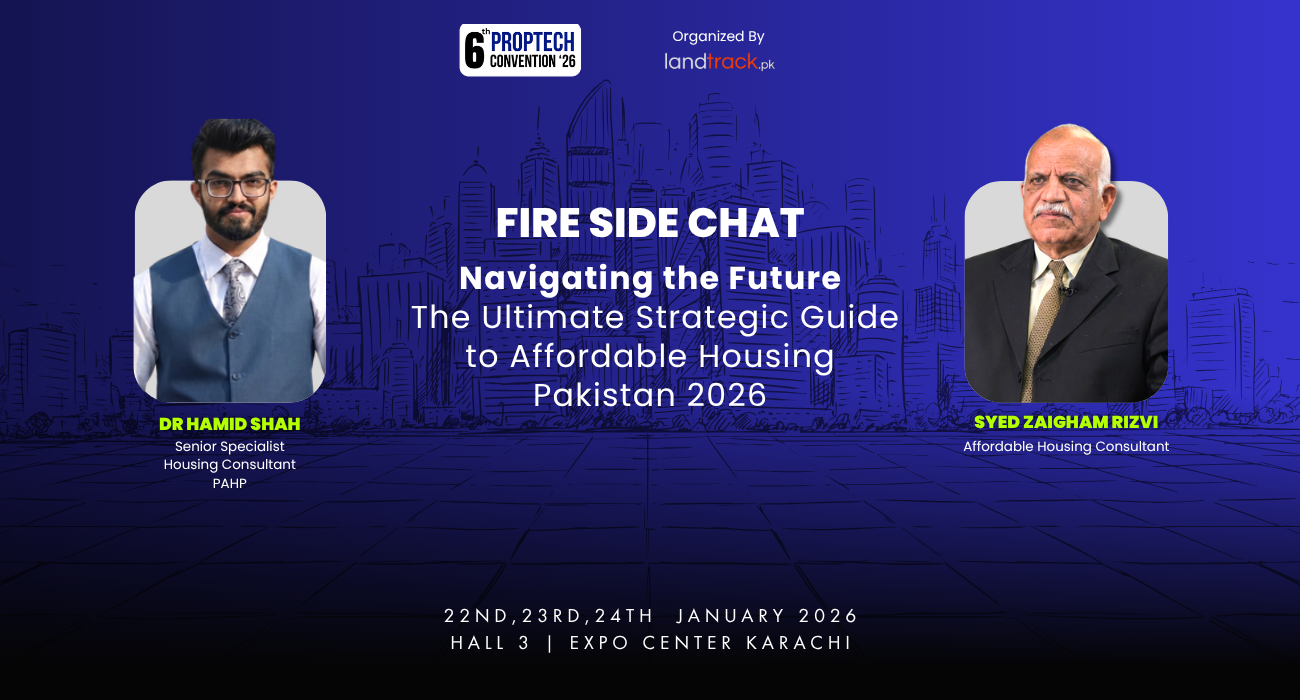
Through an exclusive fireside chat detailing the Punjab Affordable Housing Program (PAHP), dr hamid shah pahp, a Senior Specialist in Housing, revealed that the province is actively standardizing housing policies. The PAHP has initiated multi-faceted work across various portals, with consultants and designers finalizing blueprints for six specific sites across different cities in Punjab, with plans to expand aggressively across 26 additional sites.
This momentum seamlessly feeds into Chief Minister Maryam Nawaz’s flagship “Apni Chhat Apna Ghar” (ACAG) initiative. The ACAG scheme is an unprecedented interest-free lending program targeting the construction of 100,000 units. Key features that distinguish this program include:
Affordability: Monthly installments are capped at an affordable PKR 14,000, which is intentionally kept on par with standard rural rental rates.
Generous Subsidy: The government provides a massive 60% subsidy, requiring beneficiaries to cover only a 40% down payment over a five-year period.
Land Requirements: Applicants owning 1 to 5 Marlas of land in urban areas or 1 to 10 Marlas in rural areas are eligible.
To execute this massive undertaking, the government has divided the initiative into three strategic models. Model 1 entails PHATA providing state land and infrastructure to developers who must adhere strictly to approved designs. Model 2 relies on private housing schemes acting under a one-window approval mechanism. Finally, Model 3 delivers direct, interest-free loans to citizens building on their existing plots.
Bridging the Technology Gap: From Outdated Bricks to PropTech Innovation
A critical critique of affordable housing pakistan is the systemic failure to modernize construction technology. During industry discussions, experts lamented that the real estate sector has been using the exact same brick, mortar, and cement methods for over 70 years. Traditional brick kilns in villages have remained unchanged since independence, whereas nations like Singapore and China are utilizing off-site fabrication to build and functionalize multi-story hotels simultaneously.
This stagnation in physical construction is fortunately being offset by a rapid digital transformation in real estate management and investment. The recent PropTech Convention 2026 showcased how the intersection of finance, real estate, and digital infrastructure is forging a new path. One of the most groundbreaking developments is the shift away from informal, paper-based “parchi trading” toward blockchain-enabled fractional ownership.
Platforms like ishtirak.co now allow investors to purchase digital fractions of high-yield commercial assets or hotel apartments for as little as PKR 50,000. This PropTech revolution provides high liquidity, professional asset management, and crucially, an immutable digital trust layer that integrates with State Bank of Pakistan (SBP) payment rails, squeezing undocumented “black money” out of the system.
Rethinking Urban Density and Slum Redevelopment Pakistan
Addressing the housing deficit requires more than simply expanding suburban sprawl; it demands a radical overhaul of urban policy pakistan 2026 regarding existing informal settlements (katchi abadis). In metropolitan hubs like Karachi and Islamabad, nearly half of the population resides in these undocumented clusters, which occupy highly valuable urban land.
The highly anticipated zaigham rizvi speech at the PropTech Convention laid out a pragmatic blueprint for slum redevelopment pakistan. Rizvi fundamentally criticized historical “demolition drives” as socially destructive and economically naive. Instead, he proposed an integrated, market-based approach: incentivize private developers to redevelop these slums via high-density, vertical projects. Under this model, residents receive formal, upgraded housing on-site, while developers profit by utilizing the remaining plot area for luxury or commercial real estate.
This philosophy is already influencing regulatory frameworks. Early in 2026, the Capital Development Authority (CDA) implemented new regulations to upgrade and regularize recognized slums in elite sectors like F-6 and F-7. Instead of evictions, the focus is now on providing formal layout planning, sanitation, and electricity—integrating these areas into the formal municipal grid.
A Future-Ready Real Estate Policy Pakistan
The final piece of the puzzle relies on the federal government implementing a sustainable real estate policy pakistan that encourages a steady housing supply pakistan 2026 without triggering inflationary tax burdens.
A highly anticipated Real Estate and Construction Relief Package is designed to rationalize these costs. Critical proposals include drastically reducing the 236-C (Seller Tax) to 1.5% and the 236-K (Buyer Tax) to 0.5%, combined with abolishing transaction taxes entirely for first-time owners purchasing units up to one kanal. Furthermore, allowing housing loan installments to be treated as tax-deductible expenses introduces developer-led financing models that make formal credit undeniably more attractive than shadow-market dealings.
Conclusion
The trajectory of affordable housing pakistan 2026 is no longer a localized issue of brick and mortar; it is a complex nexus of digital integration, macroeconomic stabilization, and social equity. By empowering institutions like PHATA, embracing the PropTech innovations discussed at the recent PropTech Convention, and implementing market-based slum redevelopment policies, Pakistan is laying the groundwork for a documented, transparent, and highly lucrative real estate ecosystem. For developers and institutional investors, the blueprint is set: the future belongs to those who adapt to this high-density, financially inclusive, and technologically driven paradigm.
Frequently Asked Questions
What is the target for housing supply pakistan 2026?
The federal government aims to facilitate the construction of 500,000 housing units over the next four years, backed by substantial fiscal subsidies, to actively address the massive national deficit.
How does the Punjab Affordable Housing Program work?
The federal government aims to facilitate the construction of 500,000 housing units over the next four years, backed by substantial fiscal subsidies, to actively address the massive national deficit.
What is the current housing deficit in Pakistan?
Pakistan faces a severe structural housing deficit estimated at 10 million units, which continues to widen by approximately 350,000 units annually due to rapid demographic pressures.
How are PropTech innovations changing real estate in Pakistan?
PropTech introduces State Bank payment integrations and blockchain-based fractional ownership, making real estate highly transparent, accessible, and liquid for both ordinary citizens and institutional investors.
What is the ACAG or Apni Chhat Apna Ghar scheme?
ACAG is a flagship Punjab government initiative offering 100,000 interest-free housing loans with a 60% state subsidy and highly affordable monthly installments of PKR 14,000.
How does the government support low cost housing pakistan?
The government supports the sector through uniform 5% markup subsidies, the expansion of maximum loan sizes up to PKR 10 million, and strategic risk-sharing facilities with commercial banks.
What is Zaigham Rizvi's approach to slum redevelopment?
Rizvi advocates for a market-based model where private developers redevelop slums into high-density vertical projects, upgrading current residents on-site while capitalizing on remaining commercial land value.
What are the proposed tax changes in the 2026 Real Estate Relief Package?
Key proposals include drastically cutting the 236-C seller tax to 1.5%, lowering the 236-K buyer tax to 0.5%, and abolishing transaction taxes entirely for first-time homeowners.